

DEMOCRACY DAY 2026: WHEN INFORMATION IS ACCESSIBLE, DEMOCRACY IS CLOSER.
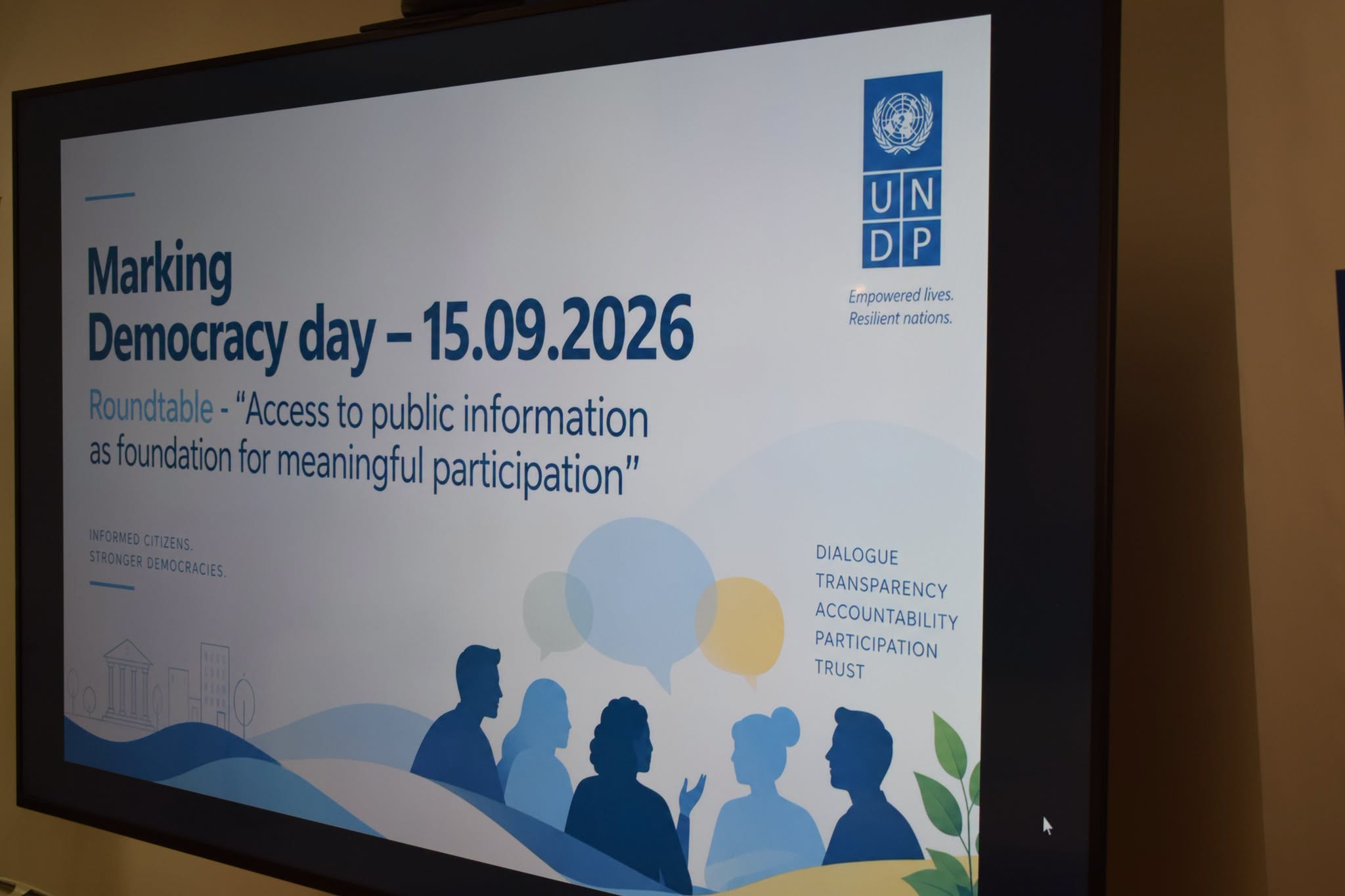
Democracy begins with one simple right: the right to know.
To know what institutions decide, how decisions are made, how public funds are used, and what is being done in the interest of citizens. Therefore, the right of free access to public information is not merely an administrative right. It is a prerequisite for an informed citizenry and meaningful democratic participation.
Transparency, accountability, and citizens’ participation in democratic processes were precisely the focus of yesterday’s roundtable organized by UNDP North Macedonia, on the occasion of 15 September – Democracy Day, which was attended by the Director of the Agency for the Protection of the Right to Free Access to Public Information, Petar Gajdov.

The meeting brought together representatives of institutions, local government, civil society, academia and the media – because transparency is not the responsibility of a single institution, but a **shared democratic responsibility**.
At the heart of the discussion was the right to free access to public information. A right which, when genuinely exercised, changes the position of the citizen: from a passive observer of public processes into an informed participant in them. The different perspectives opened space for a substantive discussion on how institutional openness and the effective exercise of the right of access to information can contribute to better democratic governance.

Particular attention was paid to proactive transparency – a concept according to which institutions have a responsibility to publish information of public interest in a timely, systematic and proactive manner. In this way, transparency becomes part of the institutional culture, rather than merely a response to a specific request for access to information.
Free access to public information, as a fundamental human right guaranteed by the Constitution of the Republic of North Macedonia, has a broader significance than simply obtaining a particular piece of information. It creates conditions for public oversight, institutional accountability, the protection of the public interest and active civic participation.**
Over the past two decades, this right has gradually evolved from a normative guarantee into an important instrument of democratic practice. Citizens, journalists, civil society organizations, information access officers, legal professionals, administrative officials, institutions and international partners have all contributed to this process.
The democratic value of information, however, can only be fully realized when it is timely, accurate, understandable and accessible to all. Therefore, the accessibility of information for persons with disabilities and inclusive communication should be an integral part of a modern transparency policy.
A transparent institution does not share information merely because it is obliged to do so. It shares information because the public has the right to know, to understand and to participate.

And this is precisely where the right of access to public information and democracy meet: citizens who have access to information have a greater opportunity to ask questions, demand accountability, participate in public dialogue and contribute to building better-quality public policies.
Therefore, YOU HAVE THE RIGHT TO KNOW is not merely a message. It is a democratic principle – and an obligation of institutions to build a society in which information is accessible, the public interest is protected, and citizens are active participants.


